
In 1942, poet Allen Curnow and composer Douglas Lilburn were living in Christchurch. They were part of a lively circle of artists, musicians, writers, poets and academics who were to have a major influence on the cultural development of New Zealand.
Together Curnow and Lilburn produced a New Zealand classic Landfall in Unknown Seas, the poem by Curnow narrated with incidental music by Lilburn. Listen to Lilburn - Landfall in Unknown Seas (1972) performed by the NZBCSO, conducted by John Ritchie, narrator Bruce Mason.
Simply by sailing in a new direction
You could enlarge the world.
You picked your captain,
Keen on discoveries, tough enough to make them,
Whatever vessels could be spared from other
More urgent service for a year's adventure;
Took stock of the more probable conjectures
About the Unknown to be traversed, all
Guesses at golden coasts and tales of monsters
To be digested into plain instructions
For likely and unlikely situations.All this resolved and done, you launched the whole
On a fine morning, the best time of year,
Skies widening and the oceanic furies
Subdued by summer illumination; time
To go and be gazed at going
On a fine morning, in the Name of God
Into the nameless waters of the world.Excerpt taken from Early days yet by Allen Curnow.
In 1942 Allen Curnow was commissioned by the Department of Internal Affairs to write a poem to mark the tercentenary (13 December, 1942) of Abel Tasman’s arrival in New Zealand.
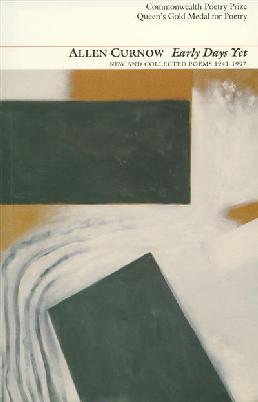 In the documentary about his life and work Early Days Yet, he describes how, having completed the poem, he was walking to work through Victoria Square. He thought he would drop in on his friend Lilburn and show him the poem, with a tentative suggestion that he might set it to music. Lilburn was inspired and the completed work, for narrator and strings was premiered from the radio station 2YA on the anniversary day, 13 December, 1942. The performance was by the NBS String Orchestra, with narration by A. Eaton Hurley. Live concerts and radio broadcasts were important cultural events at a time when there was no television and gramophone recordings were 78s, lasting 4 minutes per side.
Since that initial performance, Landfall in Unknown Seas has been recognised as an iconic piece and is widely performed and recorded. The poem, written in the shadow of World War II, captures the spirit of discovery, not only of an unknown land, but of the feeling of discovery of New Zealand by its contemporary artistic inhabitants, who no longer looked to England as “the Mother Country”. Landfall, the famous New Zealand literary journal, which also played a prominent role in encouraging New Zealand literature, was named after the poem.
Lilburn and Curnow collaborated on other work and became prolific contributors to the New Zealand poetic and musical scene.
More on Lilburn and Curnow
- Our page on Allen Curnow
- Our page on Douglas Lilburn
