
 Community Information Christchurch






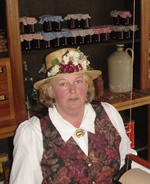
Educators keeping heritage alive
Getting students to dress up in knickerbockers and long dresses, making them do manual chores and letting them taste the fear and apprehension of the Victorian style classroom is all in a day’s work for Cindy Hey.
Heritage education co-ordinator at Ferrymead Heritage Park, Cindy is one of four teachers who deliver programmes for school children throughout Canterbury at one of Christchurch’s most interesting classrooms.
It’s satisfying work, she says. “They’re enthusiastic from the time they arrive - it’s really neat. It doesn’t matter what you get them to do, they’re keen to get stuck into everything.”
“There are three programmes for heritage and a new programme is on the way,” Cindy says. Some schools tie in visits to school anniversaries or jubilees.
Stepping Back in Time puts the students in Victorian costumes and introduces them to life as it was in early Christchurch. “The boys are in knickerbockers, and grey shirts and caps, and the girls are in long dresses with their apron as well.”
“They are treated like children 100 years ago, and we expect the manners and behaviour of children 100 years ago. The girls must go through the doorway first; if the boys are there they must open the door for them. When they walk around the boys are on the outside of the footpath and things like that - it’s all the things they would have done - all the etiquette.”
Despite being a foreign experience for them, the students warm to the idea quickly, Cindy says.
“It’s really funny - when you first tell them the girls all clap, and the boys are like ‘oh no’. But even the ones who make a bit of fuss about it, it doesn’t take them long to get in the swing of it. They start to do it automatically, which is really odd.”
The environment helps - it’s an authentic world full of reminders of yesteryear - the shop is full of old-time tinned products, the Post and Telegraph office has a working texchange and a red phoneboxes and Cindy and her team are in full heritage costume. “You could quite literally be stepping back in time - there’s no modern cars floating around, or anything to remind them that it’s a different time.”
There was even some very authentic horse poo, just near the fire station.
Students spend about two hours in the programme, with one of four different characters. Miss Black is a very strict schoolteacher for Years 3 and up, Miss Green is a “rather nice” school teacher who lets the students play heritage games such as stilt-walking, and use some of the heritage facilities.”
Mrs Hill presides in the general store and students become apprentices, learning the grocery and supply trade.
Mrs Grey is the housework (character) - students get to do housework and household chores such as cleaning and laundry - without the benefit of electricity.
It sounded like an impossible ask - motivating children to help with old-fashioned manual labour.
Cindy disagreed: “They absolutely love it. There’s no-one who says no, really. They’re looking for more things to do.”
Students have to work in teams to make beds - and the discovery of blankets and sheets is a surprise to 21st century dwellers used to duvets, Cindy says.
“The biggest shock to them is the blankets … sheets too, and a cover over the top.”
No creases are allowed.
It’s every-day tasks like bed making that really demonstrate how different life used to be - that’s where the learning happens.
“As much as it starts of this is fun, they start to appreciate how much work is involved.”
The programmes
Hear Ye from Afar is a communications module where students use radio technology and re-visit cinema as it used to be. A visit to the print shop shows the progression of the machines through the years. They also get hands on experience with slates and typewriters.
“Most of the kids have never even seen a typewriter, let alone actually used one. They use the quill pens and the nib or the dip pens, and they take a look at the stamps that used to appear on students homework.”
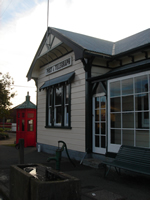
Students also visit the Postal and Telegraph centre and the biggest challenge they face is learning to use the dial telephones, Cindy says.
“They don’t know how to turn the dial, or to keep their finger in the dial”.
It’s a push-button world these days.
Students get a chance have a go on 3XP, the heritage radio station, and use the gramophone collection.
The programmes originally started in “about 1997”, and were Ministry of Education funded from 1998. Ministry funding enabled trained teachers to be employed and characters and ties to the curriculum to be developed. Feedback from students and teachers was also tied into the development process. “The curriculum is in one hand as we do our planning.”
Nearly five thousand students visit annually, which makes for a busy 40-week academic year. The courses are no longer Ministry of Education funded - but successful grant applications keep the programmes afloat.
Pioneering Pathways is the newest programme in the wings. It’s an early settlers experience, that looks back 150 years. “We’ve got the V-hut here, it would be a shame not to utilise it.”
The V-hut was constructed for Colonial House, a TV programme where a family built a home and lived like an early settler family for a period of time.
Heritage a learning experience
Heritage is hard to explain, but easy to experience, Cindy says.
“They don’t actually know they are learning learning.”
“They are having fun.”
“It’s learning by doing it. You really start to have an appreciation of just how difficult it all was.”
“You could tell them what it was like and try and describe it, but until they actually do it, you don’t get the true feel of it. It’s like the school we had yesterday - they were outside making damper. It’s freezing out there, but in a V-hut you had to cook outside - you weren’t cooking inside. So you get a real feel for life with the housework.”
The schoolhouse experience is the one that has the biggest impact on students, especially the discipline side of things, Cindy says. “It’s just so foreign to them.”
“Most times when they come here, a lot of kids have talked to their grandparents, or Dad might have told them that he got the strap at school for this or this…”

Discipline wasn’t just about being naughty - it was also about getting things wrong. “That’s the biggest shock. It wasn’t that you were really awful to someone, it was because you couldn’t spell a word. That was the really awful bit - and that’s what makes the students think - ‘that was really bad’.”
The dread and fear was a real part of life for students 100 years ago, and it’s important to keep the experience authentic.
”We all make sure we wear shoes that make a decent noise on the wooden floor.”
“That’s what it was like - you could hear the teacher walking around the room.”
“They really get into it - it works well.”
Students gain an appreciation of how different things were. “They can appreciate what people went through before us, to get what we’ve got now. A lot of life has changed and developed because of how hard things were. That’s how we’ve got were we are.”
